
Pre-Columbian foundations
Long before Spanish colonization, Mesoamerican societies developed elaborate mortuary systems tied to cosmology, agriculture, and political authority. The Olmec placed jade celts and rubber balls in burials at La Venta. Zapotec rulers at Monte Albán were interred in tombs carved directly into the valley floor, accompanied by ceramic vessels and shell ornaments. Maya kings received jade masks and obsidian blades.
These were not uniform practices. The western Mexico shaft tomb tradition — found primarily in Jalisco, Colima, and Nayarit — used vertical shafts cut into bedrock, with chambers at the bottom holding multiple individuals and distinctive ceramic figures. Coastal and highland groups maintained separate burial customs that archaeologists are still mapping.
Colonial transformation
Spanish colonization imposed Catholic funeral rites, churchyard burials, and new ideas about the afterlife. Indigenous communities often adapted rather than abandoned older beliefs. Syncretic practices emerged: saints' days overlaid with pre-Hispanic calendar observances, church cemeteries built atop or beside older burial grounds, and offerings that combined copal incense with Catholic prayers.
Colonial-era cemeteries in cities like Puebla and Guanajuato reflect European baroque aesthetics — wrought iron gates, stone angels, family crypts — while rural churchyards retained simpler wooden crosses and whitewashed walls.
Día de los Muertos
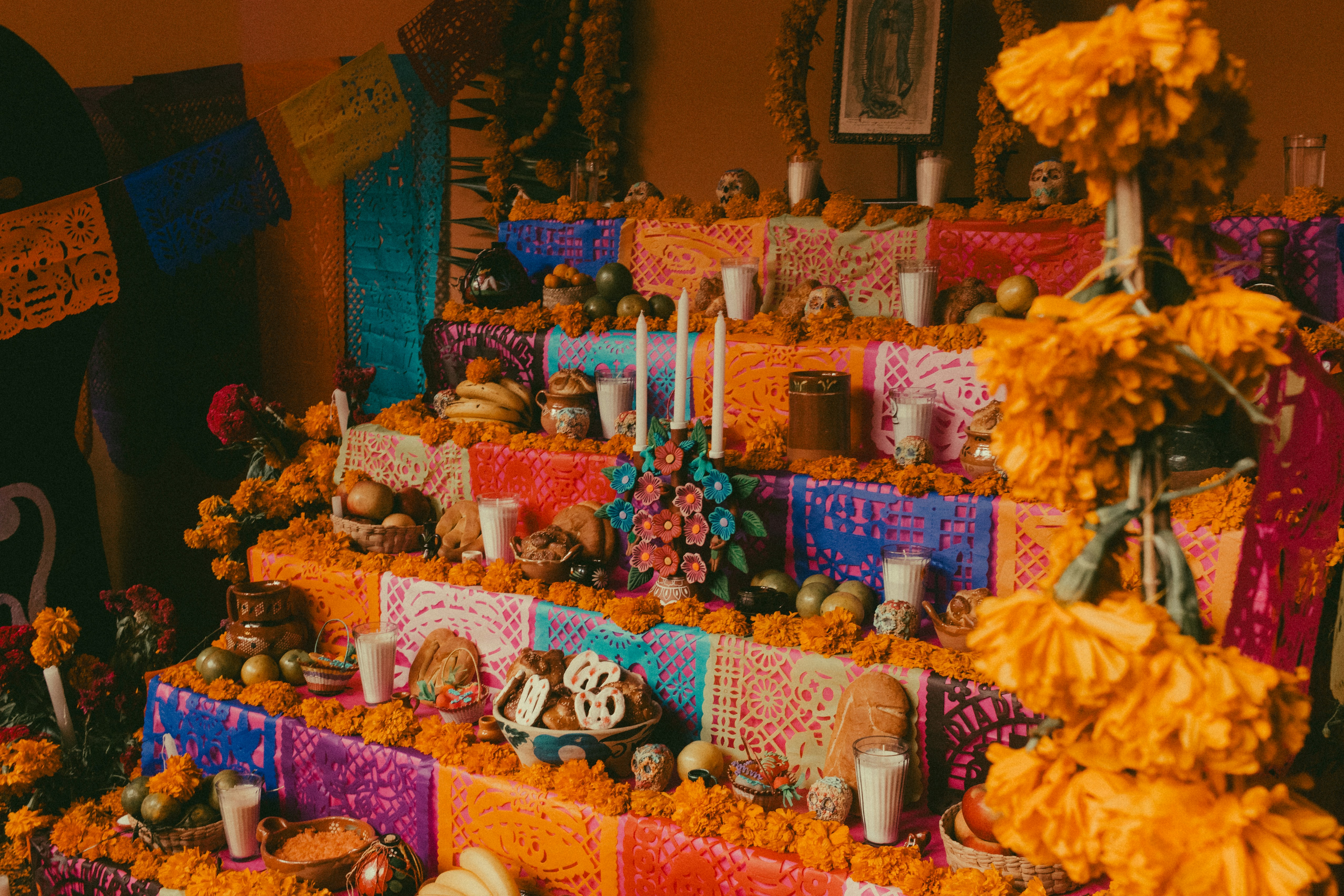
The November observance — particularly the nights of November 1 and 2 — is Mexico's most visible funerary tradition internationally. Families build ofrendas (altars) with photographs, food, marigolds (cempasúchil), and candles. Many travel to cemeteries to clean graves, replace flowers, and spend the night in vigil.
UNESCO recognized the festival as Intangible Cultural Heritage of Humanity in 2008, noting its roots in indigenous customs later influenced by Catholicism. The practice varies significantly by region: Michoacán's lake-side cemeteries draw large gatherings, while urban families may observe primarily at home altars. Read more in our article on graves, altars, and Día de los Muertos.
Modern cemetery culture
Contemporary Mexican cemeteries range from municipal plots with simple headstones to elaborate private mausoleums. In many towns, above-ground niches (panteones) accommodate multiple family members in stacked compartments — a practical response to limited land and high water tables in some regions.
Maintenance is often a family responsibility. Unlike some northern European traditions where graves are "leased" and eventually cleared, Mexican families typically expect plots to remain indefinitely, with regular visits and decoration.
Regional variations worth knowing
- Oaxaca: Strong Zapotec and Mixtec influences; Day of the Dead comparsas (processions) in Oaxaca City; ancient tombs still being excavated at Atzompa and Mitla.
- Michoacán: Lake Pátzcuaro communities maintain some of the country's most photographed cemetery vigils, particularly on Janitzio island.
- Yucatán: Maya-descended communities blend Hanal Pixán ("food for souls") observances with Catholic calendar dates.
- Central highlands: Mexico City's Panteón de Dolores holds the graves of national figures; smaller barrio cemeteries serve neighborhood families.
Respectful observation
If you visit a cemetery during Día de los Muertos or at any other time, remember these are active family spaces — not open-air museums. Ask before photographing people. Do not touch altars or offerings. Follow local guidance at archaeological sites, where tombs may be closed to protect fragile murals.