
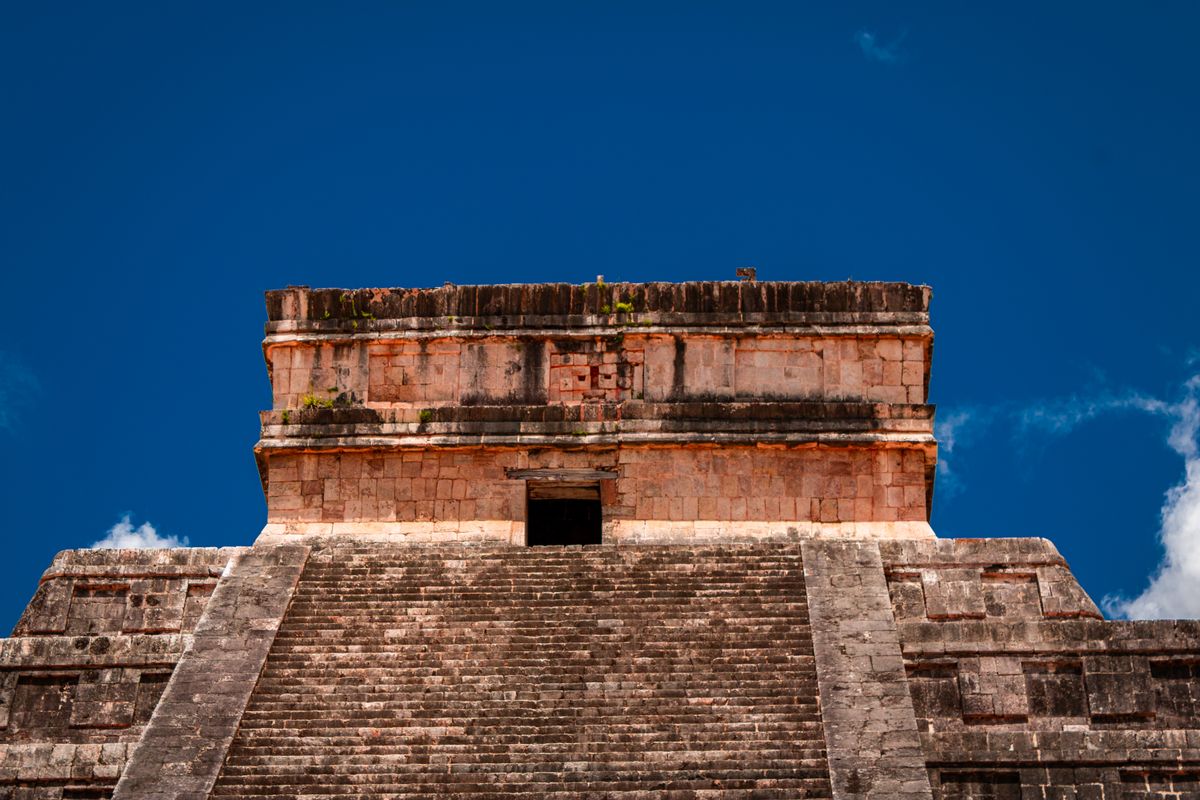
Why tombs matter to archaeologists
Burial contexts are often sealed and undisturbed for centuries, preserving organic materials, textiles, and pigments that decay in open-air settlements. A tomb's location — beneath a temple platform, inside a residential compound, or in a remote shaft — indicates social status and religious belief. Grave goods document trade routes, craft specialization, and ritual knowledge.
Mexico's Instituto Nacional de Antropología e Historia (INAH) oversees excavation and conservation at most major sites. New discoveries are announced through INAH press releases and peer-reviewed journals; we summarize findings once they are publicly documented.
Major site categories
Zapotec tombs — Oaxaca Valley
Monte Albán, the hilltop capital of the Zapotec, contains elaborate tomb complexes beneath its main plazas. Tomb 7, discovered in 1932, yielded one of Mesoamerica's richest burial assemblages — gold ornaments, carved bone, and Mixtec-style ceramics suggesting contact between cultures.
More recent work at Atzompa, a satellite site, uncovered painted tombs with murals depicting processions and supernatural figures. Our article on Zapotec painted tombs covers these finds in detail.
Maya royal burials — Chiapas and Yucatán
Palenque's Temple of the Inscriptions holds the tomb of K'inich Janaab Pakal, identified in 1952 after decades of speculation. The sarcophagus lid's carved imagery — a ruler descending into the underworld — remains one of Maya art's most studied compositions.
Other significant Maya burials have been found at Copán (just across the Honduran border), Tikal, and Calakmul. Each discovery refines the chronology of dynastic succession and ritual practice.
Western Mexico shaft tombs
The shaft tomb tradition (approximately 300 BCE to 400 CE) is distinct enough to define an archaeological culture. Vertical shafts, sometimes over ten meters deep, lead to chamber tombs lined with stone or adobe. Ceramic figures — often depicting warriors, shamans, or ballplayers — are characteristic grave goods.
See our dedicated article: The Western Mexico Shaft Tomb Tradition.
Teotihuacan and the Basin of Mexico
Teotihuacan's mortuary evidence is less visible to visitors than its pyramids, but tunnel excavations beneath the Feathered Serpent Pyramid revealed mass burials possibly connected to building dedication rituals. The site's scale suggests mortuary practice was central to Teotihuacan's political ideology.
Recent discoveries
Archaeological work in Mexico continues at a steady pace. Recent years have seen:
- Painted Zapotec tombs at Atzompa with murals in red, ochre, and black pigments
- Shaft tomb complexes in Nayarit with intact ceramic assemblages
- Maya burials at urban centers using lidar survey to identify unexcavated structures
We update our articles when INAH publishes confirmed results. Preliminary social media reports are not treated as verified facts.
Visiting archaeological sites
Most tomb interiors are closed to the public to protect fragile murals and prevent humidity damage from visitor traffic. You can still visit the sites themselves — Monte Albán, Palenque, Teotihuacan, and many others are open with standard entry fees.
- Check INAH's official site for current hours and any access restrictions
- Do not climb restricted structures or enter cordoned areas
- Hire licensed guides at major sites for context; they are trained on current research
- Photography rules vary — flash is typically prohibited near painted surfaces
Historical monuments (non-pre-Columbian)
Not all notable tombs in Mexico are ancient. The Monument to the Revolution in Mexico City began as an uncompleted legislative palace and now serves as a mausoleum for revolutionary leaders. The tomb of Leon Trotsky in Coyoacán marks the site of his 1940 assassination and draws visitors interested in 20th-century political history.
These sites fall outside INAH's pre-Hispanic mandate but belong to Mexico's broader landscape of burial and memorial architecture.