
Two spaces, one purpose
Día de los Muertos is not a single event on a single day. The Catholic calendar marks November 1 as Día de Todos los Santos (All Saints' Day) and November 2 as Día de los Fieles Difuntos (All Souls' Day). In practice, Mexican families may begin preparations weeks earlier and extend observances through the first week of November.
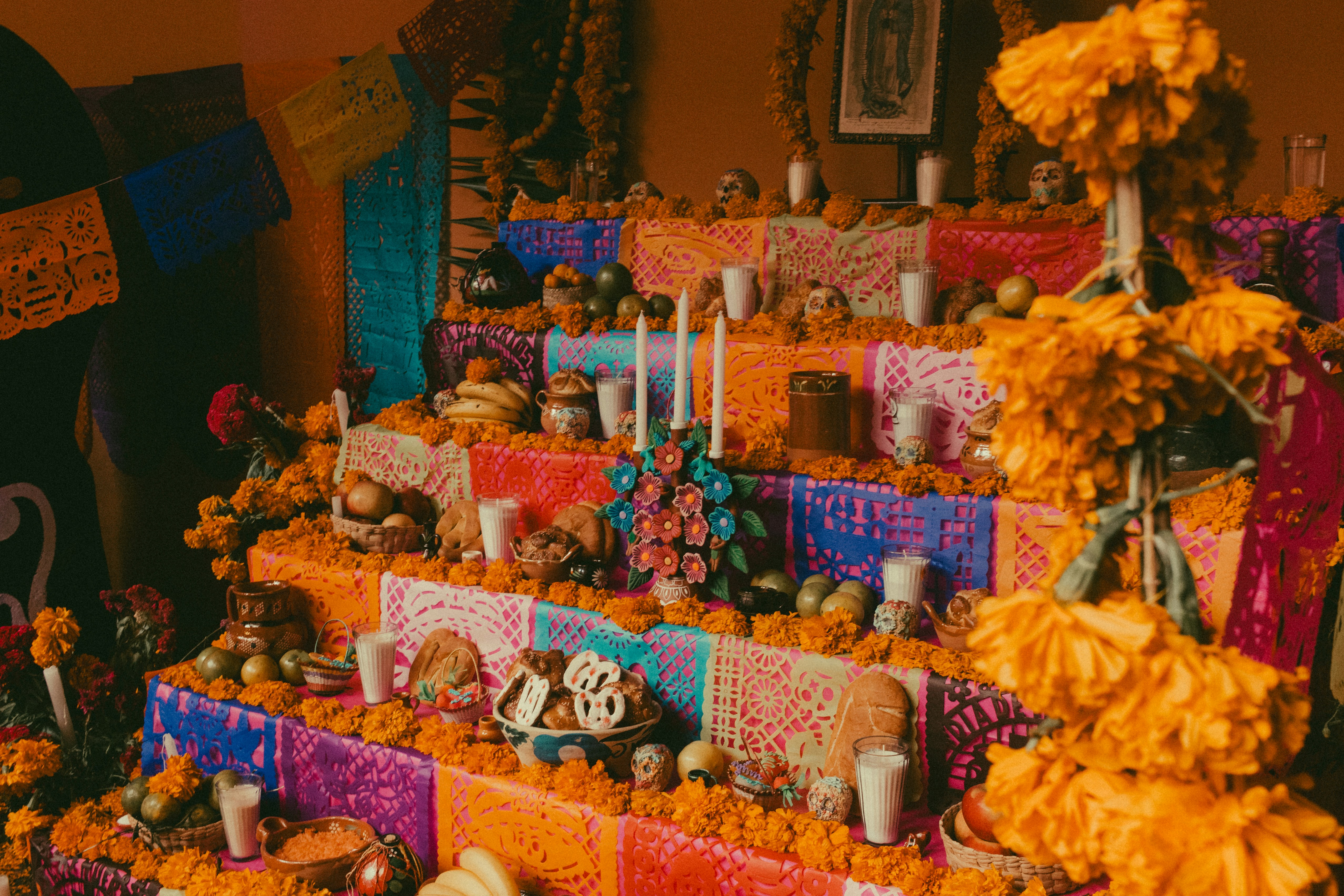
Two physical spaces anchor the tradition. The ofrenda (offering altar) is built at home, on a table or shelf, layered with photographs, food, flowers, candles, and personal objects belonging to deceased relatives. The grave is cleaned, repainted if needed, and decorated with the same marigolds (cempasúchil), candles, and offerings — but in the cemetery where the body rests.
The altar welcomes spirits home. The grave marks where they lie. Families who cannot travel to distant cemeteries may maintain only a home altar; those with nearby family plots often spend the night at the cemetery in vigil.
Preparing the grave
Grave preparation typically begins days before November 1. Family members scrape away weeds, sweep debris, and repaint concrete or stucco surfaces. Some hire workers for labor-intensive cleaning; others treat it as a collective family task passed between generations.
Fresh marigolds are essential. Their strong scent and bright orange color are said to guide souls back. Petals may be scattered in paths from cemetery gates to specific plots. Candles are placed around the headstone or niche — dozens of them on busy nights, turning cemeteries into fields of light.
Food offerings at graves include the deceased's favorite dishes: tamales, pan de muerto (a sweet bread), fruit, and drinks. Unlike the home altar, grave food is often left for sharing among family members who keep vigil through the night, blurring the line between offering and communal meal.
The home ofrenda
A traditional ofrenda has multiple levels, representing earth, purgatory, and heaven, though not every family follows this structure strictly. Common elements include:
- Photographs of the deceased
- Water — to quench thirst after the journey
- Salt — for purification
- Cempasúchil flowers
- Pan de muerto and seasonal fruit
- Candles and incense (copal)
- Personal items — a pipe, a toy, a piece of clothing
Papel picado (cut tissue paper) adds color and movement. Sugar skulls with names written on foreheads have become popular, though they are a relatively recent commercial addition rather than an ancient requirement.
Regional differences
Michoacán: Communities around Lake Pátzcuaro are famous for overnight cemetery vigils. On Janitzio island, fishermen paddle across the lake with torches, and graves are illuminated by thousands of candles. Tourism has grown substantially — visitors should be aware that cemeteries are family spaces, not staged performances.
Oaxaca: Comparsas (costumed processions) move through streets. Some communities visit graves on October 31; others focus on November 2. Mezcal and music are common at grave sites.
Yucatán: Hanal Pixán ("food for souls") follows a distinct calendar, with specific dishes like mucbipollo (a large tamale baked underground) prepared for the occasion.
Urban areas: Mexico City families may observe primarily at home if cemetery plots are distant. Public ofrendas in plazas and museums supplement private practice.
Indigenous roots and Catholic overlay
The festival's indigenous roots predate Spanish contact. Aztec and other Nahua traditions included month-long observances for the dead, presided over by Mictecacihuatl, lady of the underworld. Spanish colonizers moved these practices to coincide with All Saints' and All Souls' Days — a syncretism that allowed indigenous communities to continue honoring ancestors within a Catholic framework.
UNESCO's 2008 recognition emphasized this blending of traditions. It is not "Mexican Halloween" — the tone is commemorative rather than frightening, and humor (calaveras, satirical poems) coexists with grief.
For visitors
If you attend cemetery vigils as a visitor:
- Ask permission before photographing people or specific altars
- Do not touch offerings, candles, or decorations
- Speak quietly and avoid treating graves as photo backdrops
- Follow local guidance — some cemeteries restrict access during peak nights
The most meaningful engagement is through local cultural centers, museums, and community events rather than uninvited cemetery tourism.